
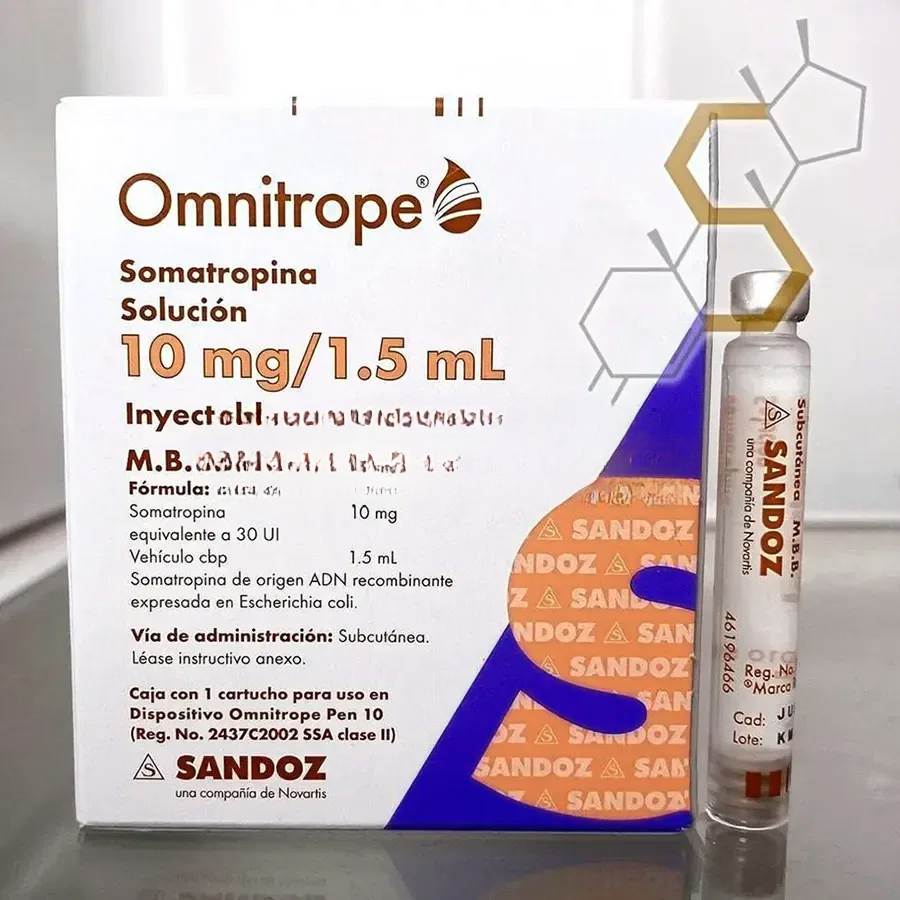
Omnitrope

Omnitrope

SC Injection

🧬 Somatropin 🏢 SANDOZ (A Novartis Division)
Generic Name Somatropin
Manufacturer SANDOZ (A Novartis Division)
Unit Price 1 Kit Pen: ৳ 20,809.68

🔹 Indications

Pediatric Patients:
  • Omnitrope injection is indicated for the treatment of pediatric patients with growth failure due to inadequate secretion of endogenous growth hormone (GH).
  • Omnitrope injection is indicated for the treatment of pediatric patients with short stature associated with Noonan syndrome.
  • Omnitrope injection is indicated for the treatment of pediatric patients with short stature associated with Turner syndrome.
  • Omnitrope injection is indicated for the treatment of pediatric patients with short stature born small for gestational age (SGA) with no catch-up growth by age 2 to 4 years.
Adult Patients: Omnitrope injection is indicated for the replacement of endogenous GH in adults with growth hormone deficiency (GHD) who meet either of the following two criteria:
  • Adult Onset (AO): Patients who have GHD, either alone or associated with multiple hormone deficiencies (hypopituitarism), as a result of pituitary disease, hypothalamic disease, surgery, radiation therapy, or trauma; or
  • Childhood-Onset (CO): Patients who were GH deficient during childhood as a result of congenital, genetic, acquired, or idiopathic causes.
Patients who were treated with Omnitrope for GHD in childhood and whose epiphyses are closed should be reevaluated before continuation of Omnitrope therapy at the reduced dose level recommended for GHD adults. According to current standards, confirmation of the diagnosis of adult GHD in both groups involves an appropriate growth hormone provocative test with two exceptions: (1) patients with multiple other pituitary hormone deficiencies due to organic disease; and (2) patients with congenital/genetic growth hormone deficiency.

🔹 Pharmacology

Pediatric Patients:
  • Omnitrope injection is indicated for the treatment of pediatric patients with growth failure due to inadequate secretion of endogenous growth hormone (GH).
  • Omnitrope injection is indicated for the treatment of pediatric patients with short stature associated with Noonan syndrome.
  • Omnitrope injection is indicated for the treatment of pediatric patients with short stature associated with Turner syndrome.
  • Omnitrope injection is indicated for the treatment of pediatric patients with short stature born small for gestational age (SGA) with no catch-up growth by age 2 to 4 years.
Adult Patients: Omnitrope injection is indicated for the replacement of endogenous GH in adults with growth hormone deficiency (GHD) who meet either of the following two criteria:
  • Adult Onset (AO): Patients who have GHD, either alone or associated with multiple hormone deficiencies (hypopituitarism), as a result of pituitary disease, hypothalamic disease, surgery, radiation therapy, or trauma; or
  • Childhood-Onset (CO): Patients who were GH deficient during childhood as a result of congenital, genetic, acquired, or idiopathic causes.
Patients who were treated with Omnitrope for GHD in childhood and whose epiphyses are closed should be reevaluated before continuation of Omnitrope therapy at the reduced dose level recommended for GHD adults. According to current standards, confirmation of the diagnosis of adult GHD in both groups involves an appropriate growth hormone provocative test with two exceptions: (1) patients with multiple other pituitary hormone deficiencies due to organic disease; and (2) patients with congenital/genetic growth hormone deficiency.

🔹 Dosage & Administration

Pediatric Patients:
  • Omnitrope injection is indicated for the treatment of pediatric patients with growth failure due to inadequate secretion of endogenous growth hormone (GH).
  • Omnitrope injection is indicated for the treatment of pediatric patients with short stature associated with Noonan syndrome.
  • Omnitrope injection is indicated for the treatment of pediatric patients with short stature associated with Turner syndrome.
  • Omnitrope injection is indicated for the treatment of pediatric patients with short stature born small for gestational age (SGA) with no catch-up growth by age 2 to 4 years.
Adult Patients: Omnitrope injection is indicated for the replacement of endogenous GH in adults with growth hormone deficiency (GHD) who meet either of the following two criteria:
  • Adult Onset (AO): Patients who have GHD, either alone or associated with multiple hormone deficiencies (hypopituitarism), as a result of pituitary disease, hypothalamic disease, surgery, radiation therapy, or trauma; or
  • Childhood-Onset (CO): Patients who were GH deficient during childhood as a result of congenital, genetic, acquired, or idiopathic causes.
Patients who were treated with Omnitrope for GHD in childhood and whose epiphyses are closed should be reevaluated before continuation of Omnitrope therapy at the reduced dose level recommended for GHD adults. According to current standards, confirmation of the diagnosis of adult GHD in both groups involves an appropriate growth hormone provocative test with two exceptions: (1) patients with multiple other pituitary hormone deficiencies due to organic disease; and (2) patients with congenital/genetic growth hormone deficiency.

🔹 Interaction

Pediatric Patients:
  • Omnitrope injection is indicated for the treatment of pediatric patients with growth failure due to inadequate secretion of endogenous growth hormone (GH).
  • Omnitrope injection is indicated for the treatment of pediatric patients with short stature associated with Noonan syndrome.
  • Omnitrope injection is indicated for the treatment of pediatric patients with short stature associated with Turner syndrome.
  • Omnitrope injection is indicated for the treatment of pediatric patients with short stature born small for gestational age (SGA) with no catch-up growth by age 2 to 4 years.
Adult Patients: Omnitrope injection is indicated for the replacement of endogenous GH in adults with growth hormone deficiency (GHD) who meet either of the following two criteria:
  • Adult Onset (AO): Patients who have GHD, either alone or associated with multiple hormone deficiencies (hypopituitarism), as a result of pituitary disease, hypothalamic disease, surgery, radiation therapy, or trauma; or
  • Childhood-Onset (CO): Patients who were GH deficient during childhood as a result of congenital, genetic, acquired, or idiopathic causes.
Patients who were treated with Omnitrope for GHD in childhood and whose epiphyses are closed should be reevaluated before continuation of Omnitrope therapy at the reduced dose level recommended for GHD adults. According to current standards, confirmation of the diagnosis of adult GHD in both groups involves an appropriate growth hormone provocative test with two exceptions: (1) patients with multiple other pituitary hormone deficiencies due to organic disease; and (2) patients with congenital/genetic growth hormone deficiency.

🔹 Contraindications

Pediatric Patients:
  • Omnitrope injection is indicated for the treatment of pediatric patients with growth failure due to inadequate secretion of endogenous growth hormone (GH).
  • Omnitrope injection is indicated for the treatment of pediatric patients with short stature associated with Noonan syndrome.
  • Omnitrope injection is indicated for the treatment of pediatric patients with short stature associated with Turner syndrome.
  • Omnitrope injection is indicated for the treatment of pediatric patients with short stature born small for gestational age (SGA) with no catch-up growth by age 2 to 4 years.
Adult Patients: Omnitrope injection is indicated for the replacement of endogenous GH in adults with growth hormone deficiency (GHD) who meet either of the following two criteria:
  • Adult Onset (AO): Patients who have GHD, either alone or associated with multiple hormone deficiencies (hypopituitarism), as a result of pituitary disease, hypothalamic disease, surgery, radiation therapy, or trauma; or
  • Childhood-Onset (CO): Patients who were GH deficient during childhood as a result of congenital, genetic, acquired, or idiopathic causes.
Patients who were treated with Omnitrope for GHD in childhood and whose epiphyses are closed should be reevaluated before continuation of Omnitrope therapy at the reduced dose level recommended for GHD adults. According to current standards, confirmation of the diagnosis of adult GHD in both groups involves an appropriate growth hormone provocative test with two exceptions: (1) patients with multiple other pituitary hormone deficiencies due to organic disease; and (2) patients with congenital/genetic growth hormone deficiency.

🔹 Side Effects

Pediatric Patients:
  • Omnitrope injection is indicated for the treatment of pediatric patients with growth failure due to inadequate secretion of endogenous growth hormone (GH).
  • Omnitrope injection is indicated for the treatment of pediatric patients with short stature associated with Noonan syndrome.
  • Omnitrope injection is indicated for the treatment of pediatric patients with short stature associated with Turner syndrome.
  • Omnitrope injection is indicated for the treatment of pediatric patients with short stature born small for gestational age (SGA) with no catch-up growth by age 2 to 4 years.
Adult Patients: Omnitrope injection is indicated for the replacement of endogenous GH in adults with growth hormone deficiency (GHD) who meet either of the following two criteria:
  • Adult Onset (AO): Patients who have GHD, either alone or associated with multiple hormone deficiencies (hypopituitarism), as a result of pituitary disease, hypothalamic disease, surgery, radiation therapy, or trauma; or
  • Childhood-Onset (CO): Patients who were GH deficient during childhood as a result of congenital, genetic, acquired, or idiopathic causes.
Patients who were treated with Omnitrope for GHD in childhood and whose epiphyses are closed should be reevaluated before continuation of Omnitrope therapy at the reduced dose level recommended for GHD adults. According to current standards, confirmation of the diagnosis of adult GHD in both groups involves an appropriate growth hormone provocative test with two exceptions: (1) patients with multiple other pituitary hormone deficiencies due to organic disease; and (2) patients with congenital/genetic growth hormone deficiency.

🔹 Pregnancy & Lactation

Pediatric Patients:
  • Omnitrope injection is indicated for the treatment of pediatric patients with growth failure due to inadequate secretion of endogenous growth hormone (GH).
  • Omnitrope injection is indicated for the treatment of pediatric patients with short stature associated with Noonan syndrome.
  • Omnitrope injection is indicated for the treatment of pediatric patients with short stature associated with Turner syndrome.
  • Omnitrope injection is indicated for the treatment of pediatric patients with short stature born small for gestational age (SGA) with no catch-up growth by age 2 to 4 years.
Adult Patients: Omnitrope injection is indicated for the replacement of endogenous GH in adults with growth hormone deficiency (GHD) who meet either of the following two criteria:
  • Adult Onset (AO): Patients who have GHD, either alone or associated with multiple hormone deficiencies (hypopituitarism), as a result of pituitary disease, hypothalamic disease, surgery, radiation therapy, or trauma; or
  • Childhood-Onset (CO): Patients who were GH deficient during childhood as a result of congenital, genetic, acquired, or idiopathic causes.
Patients who were treated with Omnitrope for GHD in childhood and whose epiphyses are closed should be reevaluated before continuation of Omnitrope therapy at the reduced dose level recommended for GHD adults. According to current standards, confirmation of the diagnosis of adult GHD in both groups involves an appropriate growth hormone provocative test with two exceptions: (1) patients with multiple other pituitary hormone deficiencies due to organic disease; and (2) patients with congenital/genetic growth hormone deficiency.

🔹 Precautions & Warnings

Pediatric Patients:
  • Omnitrope injection is indicated for the treatment of pediatric patients with growth failure due to inadequate secretion of endogenous growth hormone (GH).
  • Omnitrope injection is indicated for the treatment of pediatric patients with short stature associated with Noonan syndrome.
  • Omnitrope injection is indicated for the treatment of pediatric patients with short stature associated with Turner syndrome.
  • Omnitrope injection is indicated for the treatment of pediatric patients with short stature born small for gestational age (SGA) with no catch-up growth by age 2 to 4 years.
Adult Patients: Omnitrope injection is indicated for the replacement of endogenous GH in adults with growth hormone deficiency (GHD) who meet either of the following two criteria:
  • Adult Onset (AO): Patients who have GHD, either alone or associated with multiple hormone deficiencies (hypopituitarism), as a result of pituitary disease, hypothalamic disease, surgery, radiation therapy, or trauma; or
  • Childhood-Onset (CO): Patients who were GH deficient during childhood as a result of congenital, genetic, acquired, or idiopathic causes.
Patients who were treated with Omnitrope for GHD in childhood and whose epiphyses are closed should be reevaluated before continuation of Omnitrope therapy at the reduced dose level recommended for GHD adults. According to current standards, confirmation of the diagnosis of adult GHD in both groups involves an appropriate growth hormone provocative test with two exceptions: (1) patients with multiple other pituitary hormone deficiencies due to organic disease; and (2) patients with congenital/genetic growth hormone deficiency.

🔹 Storage Conditions

Pediatric Patients:
  • Omnitrope injection is indicated for the treatment of pediatric patients with growth failure due to inadequate secretion of endogenous growth hormone (GH).
  • Omnitrope injection is indicated for the treatment of pediatric patients with short stature associated with Noonan syndrome.
  • Omnitrope injection is indicated for the treatment of pediatric patients with short stature associated with Turner syndrome.
  • Omnitrope injection is indicated for the treatment of pediatric patients with short stature born small for gestational age (SGA) with no catch-up growth by age 2 to 4 years.
Adult Patients: Omnitrope injection is indicated for the replacement of endogenous GH in adults with growth hormone deficiency (GHD) who meet either of the following two criteria:
  • Adult Onset (AO): Patients who have GHD, either alone or associated with multiple hormone deficiencies (hypopituitarism), as a result of pituitary disease, hypothalamic disease, surgery, radiation therapy, or trauma; or
  • Childhood-Onset (CO): Patients who were GH deficient during childhood as a result of congenital, genetic, acquired, or idiopathic causes.
Patients who were treated with Omnitrope for GHD in childhood and whose epiphyses are closed should be reevaluated before continuation of Omnitrope therapy at the reduced dose level recommended for GHD adults. According to current standards, confirmation of the diagnosis of adult GHD in both groups involves an appropriate growth hormone provocative test with two exceptions: (1) patients with multiple other pituitary hormone deficiencies due to organic disease; and (2) patients with congenital/genetic growth hormone deficiency.

💡 Frequently Asked Questions

Pediatric Patients: Omnitrope injection is indicated for the treatment of pediatric patients with growth failure due to inadequate secretion of endogenous growth hormone (GH). Omnitrope injection is indicated for the treatment of pediatric patients...

User Reviews

No reviews yet!
Be the first to share your experience.

Write a Review