
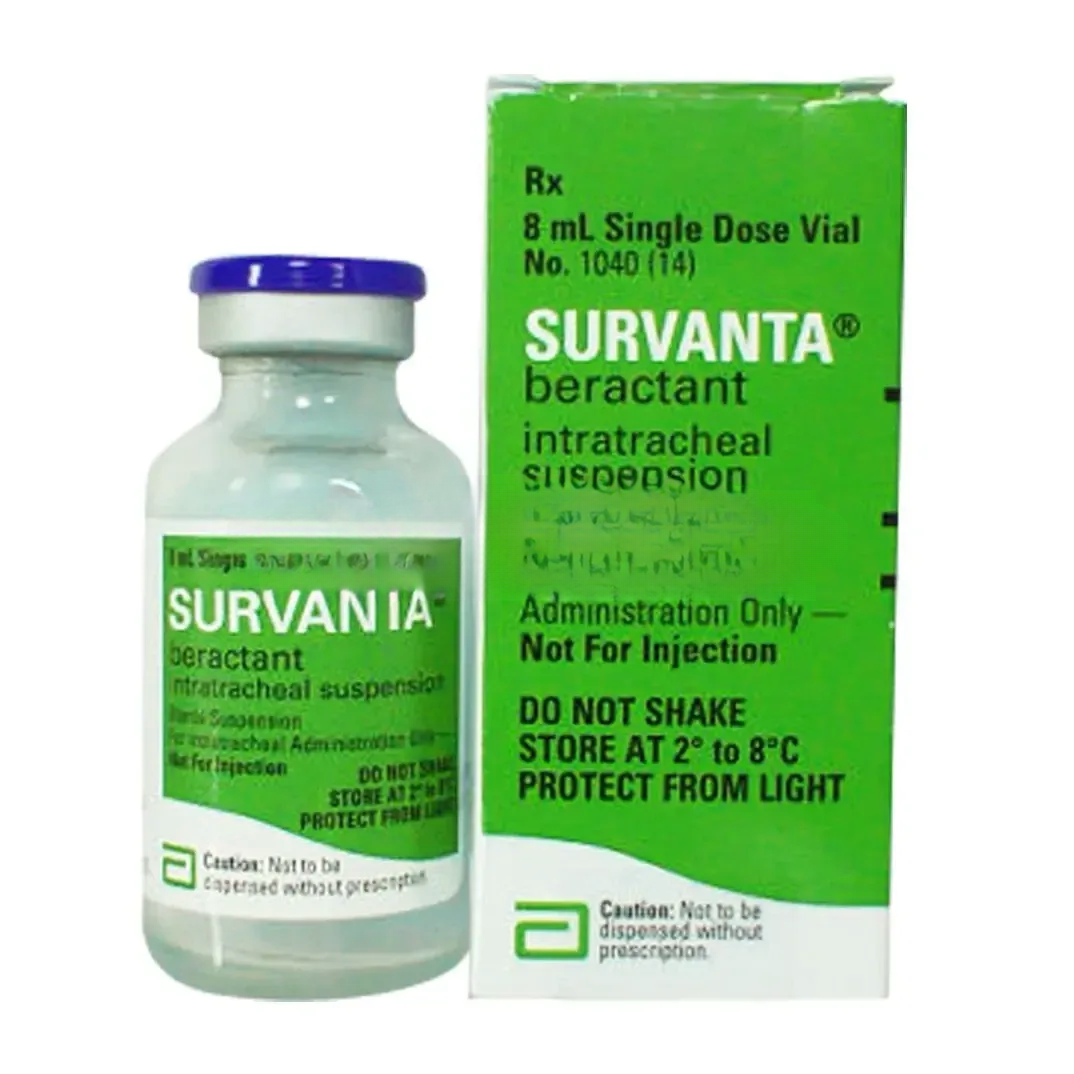
Survanta

Survanta

Intratracheal Suspension

🧬 Phospholipids 🏢 AbbVie Inc. USA
Generic Name Phospholipids
Manufacturer AbbVie Inc. USA
Unit Price 4 ml vial: ৳ 37,800.00

🔹 Indications

Survanta is indicated for prevention and treatment of Respiratory Distress Syndrome (RDS) (hyaline membrane disease) in premature infants.

Prevention: In premature infants less than 1250 g birthweight, or with evidence of surfactant deficiency, give Survanta as soon as possible, preferably within 15 minutes of birth.

Rescue: To treat infants with RDS confirmed by X-ray and requiring mechanical ventilation, give Survanta as soon as possible, preferably by 8 hours of age.

Results from clinical studies suggest that little benefit is likely to be gained from giving Survanta to infants who have completed a prenatal course of corticosteroids, unless they develop RDS within the first 6-8 hours of life.

The results of outborn compared to inborn infants were not analysed separately in the clinical trials. Outborn infants were distributed equally between the treatment groups and were not considered likely to bias the estimation of treatment effect. Therefore, there does not appear to be any evidence to suggest that outborn infants  respond less well to treatment with Survanta.

🔹 Pharmacology

Survanta is indicated for prevention and treatment of Respiratory Distress Syndrome (RDS) (hyaline membrane disease) in premature infants.

Prevention: In premature infants less than 1250 g birthweight, or with evidence of surfactant deficiency, give Survanta as soon as possible, preferably within 15 minutes of birth.

Rescue: To treat infants with RDS confirmed by X-ray and requiring mechanical ventilation, give Survanta as soon as possible, preferably by 8 hours of age.

Results from clinical studies suggest that little benefit is likely to be gained from giving Survanta to infants who have completed a prenatal course of corticosteroids, unless they develop RDS within the first 6-8 hours of life.

The results of outborn compared to inborn infants were not analysed separately in the clinical trials. Outborn infants were distributed equally between the treatment groups and were not considered likely to bias the estimation of treatment effect. Therefore, there does not appear to be any evidence to suggest that outborn infants  respond less well to treatment with Survanta.

🔹 Dosage & Administration

Survanta is indicated for prevention and treatment of Respiratory Distress Syndrome (RDS) (hyaline membrane disease) in premature infants.

Prevention: In premature infants less than 1250 g birthweight, or with evidence of surfactant deficiency, give Survanta as soon as possible, preferably within 15 minutes of birth.

Rescue: To treat infants with RDS confirmed by X-ray and requiring mechanical ventilation, give Survanta as soon as possible, preferably by 8 hours of age.

Results from clinical studies suggest that little benefit is likely to be gained from giving Survanta to infants who have completed a prenatal course of corticosteroids, unless they develop RDS within the first 6-8 hours of life.

The results of outborn compared to inborn infants were not analysed separately in the clinical trials. Outborn infants were distributed equally between the treatment groups and were not considered likely to bias the estimation of treatment effect. Therefore, there does not appear to be any evidence to suggest that outborn infants  respond less well to treatment with Survanta.

🔹 Side Effects

Survanta is indicated for prevention and treatment of Respiratory Distress Syndrome (RDS) (hyaline membrane disease) in premature infants.

Prevention: In premature infants less than 1250 g birthweight, or with evidence of surfactant deficiency, give Survanta as soon as possible, preferably within 15 minutes of birth.

Rescue: To treat infants with RDS confirmed by X-ray and requiring mechanical ventilation, give Survanta as soon as possible, preferably by 8 hours of age.

Results from clinical studies suggest that little benefit is likely to be gained from giving Survanta to infants who have completed a prenatal course of corticosteroids, unless they develop RDS within the first 6-8 hours of life.

The results of outborn compared to inborn infants were not analysed separately in the clinical trials. Outborn infants were distributed equally between the treatment groups and were not considered likely to bias the estimation of treatment effect. Therefore, there does not appear to be any evidence to suggest that outborn infants  respond less well to treatment with Survanta.

🔹 Precautions & Warnings

Survanta is indicated for prevention and treatment of Respiratory Distress Syndrome (RDS) (hyaline membrane disease) in premature infants.

Prevention: In premature infants less than 1250 g birthweight, or with evidence of surfactant deficiency, give Survanta as soon as possible, preferably within 15 minutes of birth.

Rescue: To treat infants with RDS confirmed by X-ray and requiring mechanical ventilation, give Survanta as soon as possible, preferably by 8 hours of age.

Results from clinical studies suggest that little benefit is likely to be gained from giving Survanta to infants who have completed a prenatal course of corticosteroids, unless they develop RDS within the first 6-8 hours of life.

The results of outborn compared to inborn infants were not analysed separately in the clinical trials. Outborn infants were distributed equally between the treatment groups and were not considered likely to bias the estimation of treatment effect. Therefore, there does not appear to be any evidence to suggest that outborn infants  respond less well to treatment with Survanta.

🔹 Storage Conditions

Survanta is indicated for prevention and treatment of Respiratory Distress Syndrome (RDS) (hyaline membrane disease) in premature infants.

Prevention: In premature infants less than 1250 g birthweight, or with evidence of surfactant deficiency, give Survanta as soon as possible, preferably within 15 minutes of birth.

Rescue: To treat infants with RDS confirmed by X-ray and requiring mechanical ventilation, give Survanta as soon as possible, preferably by 8 hours of age.

Results from clinical studies suggest that little benefit is likely to be gained from giving Survanta to infants who have completed a prenatal course of corticosteroids, unless they develop RDS within the first 6-8 hours of life.

The results of outborn compared to inborn infants were not analysed separately in the clinical trials. Outborn infants were distributed equally between the treatment groups and were not considered likely to bias the estimation of treatment effect. Therefore, there does not appear to be any evidence to suggest that outborn infants  respond less well to treatment with Survanta.

💡 Frequently Asked Questions

Survanta is indicated for prevention and treatment of Respiratory Distress Syndrome (RDS) (hyaline membrane disease) in premature infants.Prevention: In premature infants less than 1250 g birthweight, or with evidence of surfactant deficiency, give S...

User Reviews

No reviews yet!
Be the first to share your experience.

Write a Review