
বাংলায় দেখুন
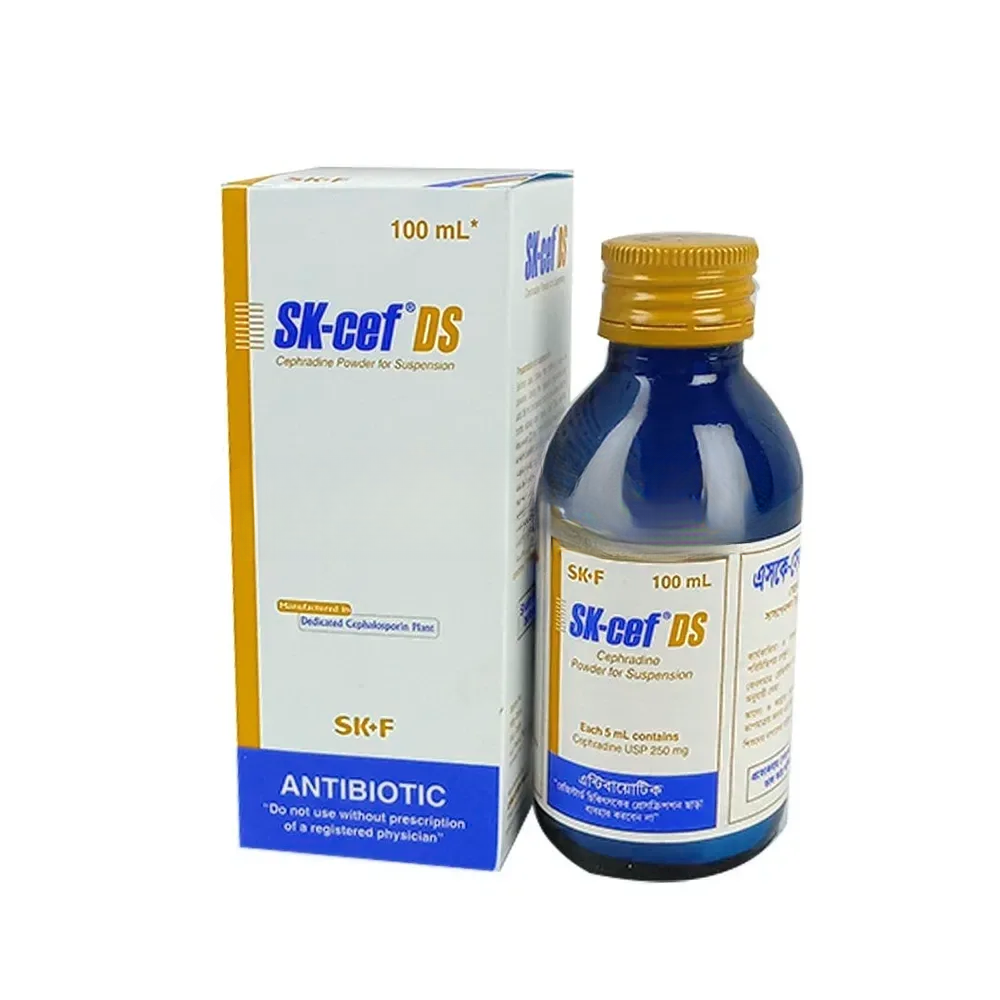
SK-cef DS

SK-cef DS

Powder for Suspension

🧬 Cephradine 🏢 Eskayef Pharmaceuticals Ltd.
Generic Name Cephradine
Manufacturer Eskayef Pharmaceuticals Ltd.
Unit Price 60 ml bottle: ৳ 80.00

🔹 Indications

SK-cef DS is indicated for the treatment of infections caused by sensitive Gram-positive and Gram-negative bacteria. These include-
  • Undesirable Upper respiratory tract infections: sinusitis, pharyngitis, tonsillitis, laryngo-tracheo bronchitis and otitis media, and also
  • Lower respiratory tract infections: bronchitis (acute and chronic), lobar pneumonia and bronchopneumonia.
  • Urinary tract infections: cystitis, urethritis and pyelonephritis.
  • Skin and soft tissue infections: abscess, cellulitis, furunculosis and impetigo.
The following microorganisms are susceptible, in vitro to SK-cef DS:
  • Gram-positive: Staphylococci (both penicillin sensitive and resistant strains and penicillinase-producing species), Streptococci, Streptococci pyogenes (beta haemolytic), Streptococcus pneumonia.
  • Gram-negative: Escherichia coli, Klebsiella spp, Proteus mirabilis, Haemophilus influenza, Shigella spp, Salmonella spp (including Salmonella typhi), Neisseria spp Many strains of E.coli and Staphylococcus aureus that produce the enzyme penicillinase and thus are ampicillin resistant, are susceptible to SK-cef DS which is unaffected by this enzyme.

🔹 Pharmacology

SK-cef DS is indicated for the treatment of infections caused by sensitive Gram-positive and Gram-negative bacteria. These include-
  • Undesirable Upper respiratory tract infections: sinusitis, pharyngitis, tonsillitis, laryngo-tracheo bronchitis and otitis media, and also
  • Lower respiratory tract infections: bronchitis (acute and chronic), lobar pneumonia and bronchopneumonia.
  • Urinary tract infections: cystitis, urethritis and pyelonephritis.
  • Skin and soft tissue infections: abscess, cellulitis, furunculosis and impetigo.
The following microorganisms are susceptible, in vitro to SK-cef DS:
  • Gram-positive: Staphylococci (both penicillin sensitive and resistant strains and penicillinase-producing species), Streptococci, Streptococci pyogenes (beta haemolytic), Streptococcus pneumonia.
  • Gram-negative: Escherichia coli, Klebsiella spp, Proteus mirabilis, Haemophilus influenza, Shigella spp, Salmonella spp (including Salmonella typhi), Neisseria spp Many strains of E.coli and Staphylococcus aureus that produce the enzyme penicillinase and thus are ampicillin resistant, are susceptible to SK-cef DS which is unaffected by this enzyme.

🔹 Dosage & Administration

SK-cef DS is indicated for the treatment of infections caused by sensitive Gram-positive and Gram-negative bacteria. These include-
  • Undesirable Upper respiratory tract infections: sinusitis, pharyngitis, tonsillitis, laryngo-tracheo bronchitis and otitis media, and also
  • Lower respiratory tract infections: bronchitis (acute and chronic), lobar pneumonia and bronchopneumonia.
  • Urinary tract infections: cystitis, urethritis and pyelonephritis.
  • Skin and soft tissue infections: abscess, cellulitis, furunculosis and impetigo.
The following microorganisms are susceptible, in vitro to SK-cef DS:
  • Gram-positive: Staphylococci (both penicillin sensitive and resistant strains and penicillinase-producing species), Streptococci, Streptococci pyogenes (beta haemolytic), Streptococcus pneumonia.
  • Gram-negative: Escherichia coli, Klebsiella spp, Proteus mirabilis, Haemophilus influenza, Shigella spp, Salmonella spp (including Salmonella typhi), Neisseria spp Many strains of E.coli and Staphylococcus aureus that produce the enzyme penicillinase and thus are ampicillin resistant, are susceptible to SK-cef DS which is unaffected by this enzyme.

🔹 Interaction

SK-cef DS is indicated for the treatment of infections caused by sensitive Gram-positive and Gram-negative bacteria. These include-
  • Undesirable Upper respiratory tract infections: sinusitis, pharyngitis, tonsillitis, laryngo-tracheo bronchitis and otitis media, and also
  • Lower respiratory tract infections: bronchitis (acute and chronic), lobar pneumonia and bronchopneumonia.
  • Urinary tract infections: cystitis, urethritis and pyelonephritis.
  • Skin and soft tissue infections: abscess, cellulitis, furunculosis and impetigo.
The following microorganisms are susceptible, in vitro to SK-cef DS:
  • Gram-positive: Staphylococci (both penicillin sensitive and resistant strains and penicillinase-producing species), Streptococci, Streptococci pyogenes (beta haemolytic), Streptococcus pneumonia.
  • Gram-negative: Escherichia coli, Klebsiella spp, Proteus mirabilis, Haemophilus influenza, Shigella spp, Salmonella spp (including Salmonella typhi), Neisseria spp Many strains of E.coli and Staphylococcus aureus that produce the enzyme penicillinase and thus are ampicillin resistant, are susceptible to SK-cef DS which is unaffected by this enzyme.

🔹 Contraindications

SK-cef DS is indicated for the treatment of infections caused by sensitive Gram-positive and Gram-negative bacteria. These include-
  • Undesirable Upper respiratory tract infections: sinusitis, pharyngitis, tonsillitis, laryngo-tracheo bronchitis and otitis media, and also
  • Lower respiratory tract infections: bronchitis (acute and chronic), lobar pneumonia and bronchopneumonia.
  • Urinary tract infections: cystitis, urethritis and pyelonephritis.
  • Skin and soft tissue infections: abscess, cellulitis, furunculosis and impetigo.
The following microorganisms are susceptible, in vitro to SK-cef DS:
  • Gram-positive: Staphylococci (both penicillin sensitive and resistant strains and penicillinase-producing species), Streptococci, Streptococci pyogenes (beta haemolytic), Streptococcus pneumonia.
  • Gram-negative: Escherichia coli, Klebsiella spp, Proteus mirabilis, Haemophilus influenza, Shigella spp, Salmonella spp (including Salmonella typhi), Neisseria spp Many strains of E.coli and Staphylococcus aureus that produce the enzyme penicillinase and thus are ampicillin resistant, are susceptible to SK-cef DS which is unaffected by this enzyme.

🔹 Side Effects

SK-cef DS is indicated for the treatment of infections caused by sensitive Gram-positive and Gram-negative bacteria. These include-
  • Undesirable Upper respiratory tract infections: sinusitis, pharyngitis, tonsillitis, laryngo-tracheo bronchitis and otitis media, and also
  • Lower respiratory tract infections: bronchitis (acute and chronic), lobar pneumonia and bronchopneumonia.
  • Urinary tract infections: cystitis, urethritis and pyelonephritis.
  • Skin and soft tissue infections: abscess, cellulitis, furunculosis and impetigo.
The following microorganisms are susceptible, in vitro to SK-cef DS:
  • Gram-positive: Staphylococci (both penicillin sensitive and resistant strains and penicillinase-producing species), Streptococci, Streptococci pyogenes (beta haemolytic), Streptococcus pneumonia.
  • Gram-negative: Escherichia coli, Klebsiella spp, Proteus mirabilis, Haemophilus influenza, Shigella spp, Salmonella spp (including Salmonella typhi), Neisseria spp Many strains of E.coli and Staphylococcus aureus that produce the enzyme penicillinase and thus are ampicillin resistant, are susceptible to SK-cef DS which is unaffected by this enzyme.

🔹 Pregnancy & Lactation

SK-cef DS is indicated for the treatment of infections caused by sensitive Gram-positive and Gram-negative bacteria. These include-
  • Undesirable Upper respiratory tract infections: sinusitis, pharyngitis, tonsillitis, laryngo-tracheo bronchitis and otitis media, and also
  • Lower respiratory tract infections: bronchitis (acute and chronic), lobar pneumonia and bronchopneumonia.
  • Urinary tract infections: cystitis, urethritis and pyelonephritis.
  • Skin and soft tissue infections: abscess, cellulitis, furunculosis and impetigo.
The following microorganisms are susceptible, in vitro to SK-cef DS:
  • Gram-positive: Staphylococci (both penicillin sensitive and resistant strains and penicillinase-producing species), Streptococci, Streptococci pyogenes (beta haemolytic), Streptococcus pneumonia.
  • Gram-negative: Escherichia coli, Klebsiella spp, Proteus mirabilis, Haemophilus influenza, Shigella spp, Salmonella spp (including Salmonella typhi), Neisseria spp Many strains of E.coli and Staphylococcus aureus that produce the enzyme penicillinase and thus are ampicillin resistant, are susceptible to SK-cef DS which is unaffected by this enzyme.

🔹 Precautions & Warnings

SK-cef DS is indicated for the treatment of infections caused by sensitive Gram-positive and Gram-negative bacteria. These include-
  • Undesirable Upper respiratory tract infections: sinusitis, pharyngitis, tonsillitis, laryngo-tracheo bronchitis and otitis media, and also
  • Lower respiratory tract infections: bronchitis (acute and chronic), lobar pneumonia and bronchopneumonia.
  • Urinary tract infections: cystitis, urethritis and pyelonephritis.
  • Skin and soft tissue infections: abscess, cellulitis, furunculosis and impetigo.
The following microorganisms are susceptible, in vitro to SK-cef DS:
  • Gram-positive: Staphylococci (both penicillin sensitive and resistant strains and penicillinase-producing species), Streptococci, Streptococci pyogenes (beta haemolytic), Streptococcus pneumonia.
  • Gram-negative: Escherichia coli, Klebsiella spp, Proteus mirabilis, Haemophilus influenza, Shigella spp, Salmonella spp (including Salmonella typhi), Neisseria spp Many strains of E.coli and Staphylococcus aureus that produce the enzyme penicillinase and thus are ampicillin resistant, are susceptible to SK-cef DS which is unaffected by this enzyme.

💡 Frequently Asked Questions

SK-cef DS is indicated for the treatment of infections caused by sensitive Gram-positive and Gram-negative bacteria. These include- Undesirable Upper respiratory tract infections: sinusitis, pharyngitis, tonsillitis, laryngo-tracheo bronchitis and o...

User Reviews

No reviews yet!
Be the first to share your experience.

Write a Review