
বাংলায় দেখুন
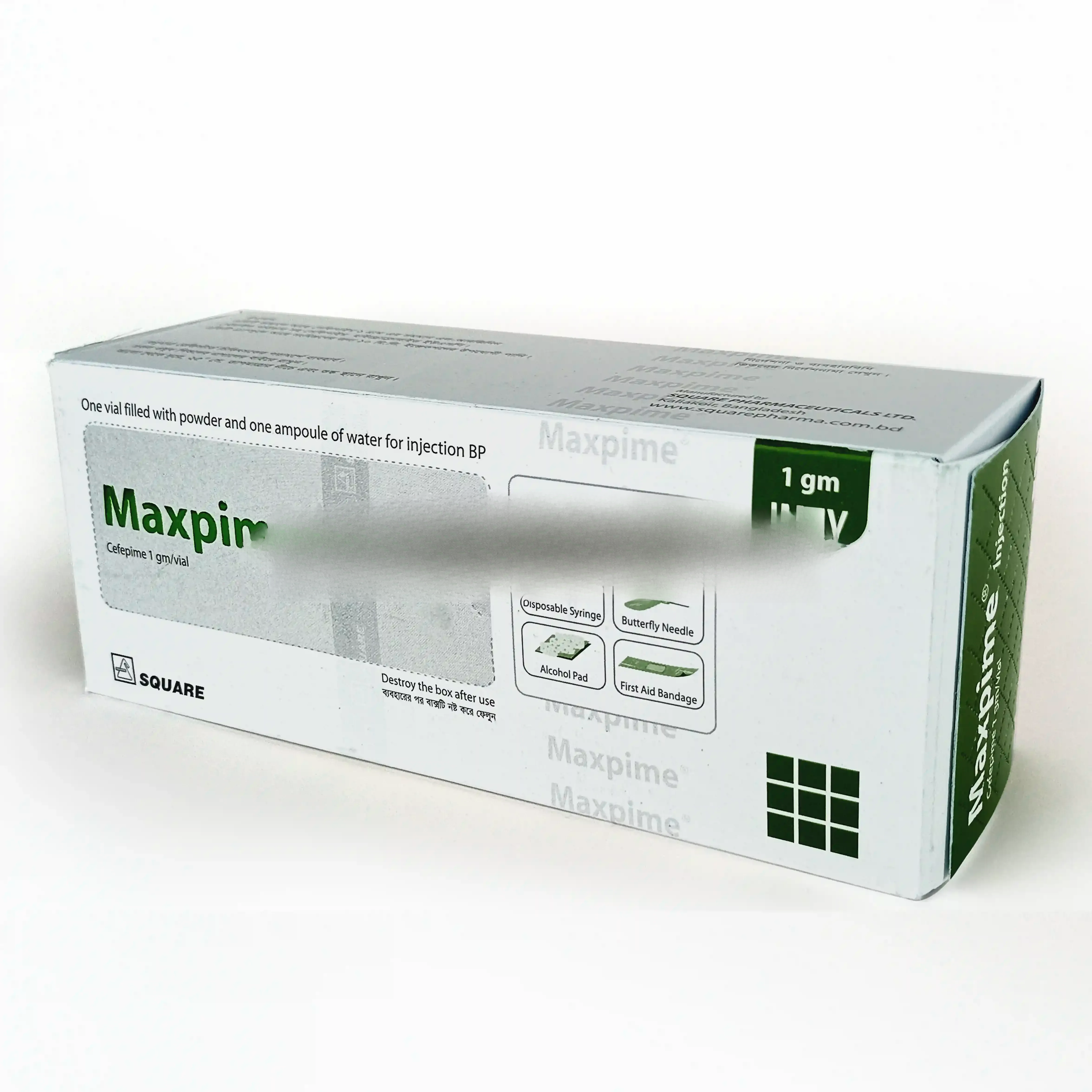
Maxpime

Maxpime

IM/IV Injection

🧬 Cefepime Hydrochloride 🏢 Square Pharmaceuticals PLC
Generic Name Cefepime Hydrochloride
Manufacturer Square Pharmaceuticals PLC
Unit Price 1 gm vial: ৳ 551.65

🔹 Indications

Maxpime is indicated for the treatment of the following infections caused by susceptible strains of the microorganisms:
  • Pneumonia (moderate to severe): caused by Streptococcus pneumoniae, including cases associated with concurrent bacteremia, Pseudomonas aeruginosa, Klebsiella pneumoniae, or Enterobacter species.
  • Febrile Neutropenia: Maxpime as monotherapy is indicated for empiric treatment of febrile neutropenic patients. In patients at high risk for severe infection (including patients with a history of recent bone marrow transplantation, with hypotension at presentation, with an underlying hematologic malignancy, or with severe or prolonged neutropenia), antimicrobial monotherapy may not be appropriate. Insufficient data exist to support the efficacy of cefepime monotherapy in such patients.
  • Uncomplicated and Complicated Urinary Tract Infections (including pyelonephritis): caused by Escherichia coli or Klebsiella pneumoniae, when the infection is severe, or caused by Escherichia coli, Klebsiella pneumoniae, or Proteus mirabilis, when the infection is mild to moderate, including cases associated with concurrent bacteremia with these microorganisms.
  • Uncomplicated Skin and Skin Structure Infections: caused by Staphylococcus aureus (methicillin- susceptible strains only) or Streptococcus pyogenes.
  • Complicated Intra-abdominal Infections (used in combination with metronidazole): caused by Escherichia coli, viridians group streptococci, Pseudomonas aeruginosa, Klebsiella pneumoniae, Enterobacter species, or Bacteroides fragilis.

🔹 Pharmacology

Maxpime is indicated for the treatment of the following infections caused by susceptible strains of the microorganisms:
  • Pneumonia (moderate to severe): caused by Streptococcus pneumoniae, including cases associated with concurrent bacteremia, Pseudomonas aeruginosa, Klebsiella pneumoniae, or Enterobacter species.
  • Febrile Neutropenia: Maxpime as monotherapy is indicated for empiric treatment of febrile neutropenic patients. In patients at high risk for severe infection (including patients with a history of recent bone marrow transplantation, with hypotension at presentation, with an underlying hematologic malignancy, or with severe or prolonged neutropenia), antimicrobial monotherapy may not be appropriate. Insufficient data exist to support the efficacy of cefepime monotherapy in such patients.
  • Uncomplicated and Complicated Urinary Tract Infections (including pyelonephritis): caused by Escherichia coli or Klebsiella pneumoniae, when the infection is severe, or caused by Escherichia coli, Klebsiella pneumoniae, or Proteus mirabilis, when the infection is mild to moderate, including cases associated with concurrent bacteremia with these microorganisms.
  • Uncomplicated Skin and Skin Structure Infections: caused by Staphylococcus aureus (methicillin- susceptible strains only) or Streptococcus pyogenes.
  • Complicated Intra-abdominal Infections (used in combination with metronidazole): caused by Escherichia coli, viridians group streptococci, Pseudomonas aeruginosa, Klebsiella pneumoniae, Enterobacter species, or Bacteroides fragilis.

🔹 Dosage & Administration

Maxpime is indicated for the treatment of the following infections caused by susceptible strains of the microorganisms:
  • Pneumonia (moderate to severe): caused by Streptococcus pneumoniae, including cases associated with concurrent bacteremia, Pseudomonas aeruginosa, Klebsiella pneumoniae, or Enterobacter species.
  • Febrile Neutropenia: Maxpime as monotherapy is indicated for empiric treatment of febrile neutropenic patients. In patients at high risk for severe infection (including patients with a history of recent bone marrow transplantation, with hypotension at presentation, with an underlying hematologic malignancy, or with severe or prolonged neutropenia), antimicrobial monotherapy may not be appropriate. Insufficient data exist to support the efficacy of cefepime monotherapy in such patients.
  • Uncomplicated and Complicated Urinary Tract Infections (including pyelonephritis): caused by Escherichia coli or Klebsiella pneumoniae, when the infection is severe, or caused by Escherichia coli, Klebsiella pneumoniae, or Proteus mirabilis, when the infection is mild to moderate, including cases associated with concurrent bacteremia with these microorganisms.
  • Uncomplicated Skin and Skin Structure Infections: caused by Staphylococcus aureus (methicillin- susceptible strains only) or Streptococcus pyogenes.
  • Complicated Intra-abdominal Infections (used in combination with metronidazole): caused by Escherichia coli, viridians group streptococci, Pseudomonas aeruginosa, Klebsiella pneumoniae, Enterobacter species, or Bacteroides fragilis.

🔹 Interaction

Maxpime is indicated for the treatment of the following infections caused by susceptible strains of the microorganisms:
  • Pneumonia (moderate to severe): caused by Streptococcus pneumoniae, including cases associated with concurrent bacteremia, Pseudomonas aeruginosa, Klebsiella pneumoniae, or Enterobacter species.
  • Febrile Neutropenia: Maxpime as monotherapy is indicated for empiric treatment of febrile neutropenic patients. In patients at high risk for severe infection (including patients with a history of recent bone marrow transplantation, with hypotension at presentation, with an underlying hematologic malignancy, or with severe or prolonged neutropenia), antimicrobial monotherapy may not be appropriate. Insufficient data exist to support the efficacy of cefepime monotherapy in such patients.
  • Uncomplicated and Complicated Urinary Tract Infections (including pyelonephritis): caused by Escherichia coli or Klebsiella pneumoniae, when the infection is severe, or caused by Escherichia coli, Klebsiella pneumoniae, or Proteus mirabilis, when the infection is mild to moderate, including cases associated with concurrent bacteremia with these microorganisms.
  • Uncomplicated Skin and Skin Structure Infections: caused by Staphylococcus aureus (methicillin- susceptible strains only) or Streptococcus pyogenes.
  • Complicated Intra-abdominal Infections (used in combination with metronidazole): caused by Escherichia coli, viridians group streptococci, Pseudomonas aeruginosa, Klebsiella pneumoniae, Enterobacter species, or Bacteroides fragilis.

🔹 Contraindications

Maxpime is indicated for the treatment of the following infections caused by susceptible strains of the microorganisms:
  • Pneumonia (moderate to severe): caused by Streptococcus pneumoniae, including cases associated with concurrent bacteremia, Pseudomonas aeruginosa, Klebsiella pneumoniae, or Enterobacter species.
  • Febrile Neutropenia: Maxpime as monotherapy is indicated for empiric treatment of febrile neutropenic patients. In patients at high risk for severe infection (including patients with a history of recent bone marrow transplantation, with hypotension at presentation, with an underlying hematologic malignancy, or with severe or prolonged neutropenia), antimicrobial monotherapy may not be appropriate. Insufficient data exist to support the efficacy of cefepime monotherapy in such patients.
  • Uncomplicated and Complicated Urinary Tract Infections (including pyelonephritis): caused by Escherichia coli or Klebsiella pneumoniae, when the infection is severe, or caused by Escherichia coli, Klebsiella pneumoniae, or Proteus mirabilis, when the infection is mild to moderate, including cases associated with concurrent bacteremia with these microorganisms.
  • Uncomplicated Skin and Skin Structure Infections: caused by Staphylococcus aureus (methicillin- susceptible strains only) or Streptococcus pyogenes.
  • Complicated Intra-abdominal Infections (used in combination with metronidazole): caused by Escherichia coli, viridians group streptococci, Pseudomonas aeruginosa, Klebsiella pneumoniae, Enterobacter species, or Bacteroides fragilis.

🔹 Side Effects

Maxpime is indicated for the treatment of the following infections caused by susceptible strains of the microorganisms:
  • Pneumonia (moderate to severe): caused by Streptococcus pneumoniae, including cases associated with concurrent bacteremia, Pseudomonas aeruginosa, Klebsiella pneumoniae, or Enterobacter species.
  • Febrile Neutropenia: Maxpime as monotherapy is indicated for empiric treatment of febrile neutropenic patients. In patients at high risk for severe infection (including patients with a history of recent bone marrow transplantation, with hypotension at presentation, with an underlying hematologic malignancy, or with severe or prolonged neutropenia), antimicrobial monotherapy may not be appropriate. Insufficient data exist to support the efficacy of cefepime monotherapy in such patients.
  • Uncomplicated and Complicated Urinary Tract Infections (including pyelonephritis): caused by Escherichia coli or Klebsiella pneumoniae, when the infection is severe, or caused by Escherichia coli, Klebsiella pneumoniae, or Proteus mirabilis, when the infection is mild to moderate, including cases associated with concurrent bacteremia with these microorganisms.
  • Uncomplicated Skin and Skin Structure Infections: caused by Staphylococcus aureus (methicillin- susceptible strains only) or Streptococcus pyogenes.
  • Complicated Intra-abdominal Infections (used in combination with metronidazole): caused by Escherichia coli, viridians group streptococci, Pseudomonas aeruginosa, Klebsiella pneumoniae, Enterobacter species, or Bacteroides fragilis.

🔹 Pregnancy & Lactation

Maxpime is indicated for the treatment of the following infections caused by susceptible strains of the microorganisms:
  • Pneumonia (moderate to severe): caused by Streptococcus pneumoniae, including cases associated with concurrent bacteremia, Pseudomonas aeruginosa, Klebsiella pneumoniae, or Enterobacter species.
  • Febrile Neutropenia: Maxpime as monotherapy is indicated for empiric treatment of febrile neutropenic patients. In patients at high risk for severe infection (including patients with a history of recent bone marrow transplantation, with hypotension at presentation, with an underlying hematologic malignancy, or with severe or prolonged neutropenia), antimicrobial monotherapy may not be appropriate. Insufficient data exist to support the efficacy of cefepime monotherapy in such patients.
  • Uncomplicated and Complicated Urinary Tract Infections (including pyelonephritis): caused by Escherichia coli or Klebsiella pneumoniae, when the infection is severe, or caused by Escherichia coli, Klebsiella pneumoniae, or Proteus mirabilis, when the infection is mild to moderate, including cases associated with concurrent bacteremia with these microorganisms.
  • Uncomplicated Skin and Skin Structure Infections: caused by Staphylococcus aureus (methicillin- susceptible strains only) or Streptococcus pyogenes.
  • Complicated Intra-abdominal Infections (used in combination with metronidazole): caused by Escherichia coli, viridians group streptococci, Pseudomonas aeruginosa, Klebsiella pneumoniae, Enterobacter species, or Bacteroides fragilis.

🔹 Precautions & Warnings

Maxpime is indicated for the treatment of the following infections caused by susceptible strains of the microorganisms:
  • Pneumonia (moderate to severe): caused by Streptococcus pneumoniae, including cases associated with concurrent bacteremia, Pseudomonas aeruginosa, Klebsiella pneumoniae, or Enterobacter species.
  • Febrile Neutropenia: Maxpime as monotherapy is indicated for empiric treatment of febrile neutropenic patients. In patients at high risk for severe infection (including patients with a history of recent bone marrow transplantation, with hypotension at presentation, with an underlying hematologic malignancy, or with severe or prolonged neutropenia), antimicrobial monotherapy may not be appropriate. Insufficient data exist to support the efficacy of cefepime monotherapy in such patients.
  • Uncomplicated and Complicated Urinary Tract Infections (including pyelonephritis): caused by Escherichia coli or Klebsiella pneumoniae, when the infection is severe, or caused by Escherichia coli, Klebsiella pneumoniae, or Proteus mirabilis, when the infection is mild to moderate, including cases associated with concurrent bacteremia with these microorganisms.
  • Uncomplicated Skin and Skin Structure Infections: caused by Staphylococcus aureus (methicillin- susceptible strains only) or Streptococcus pyogenes.
  • Complicated Intra-abdominal Infections (used in combination with metronidazole): caused by Escherichia coli, viridians group streptococci, Pseudomonas aeruginosa, Klebsiella pneumoniae, Enterobacter species, or Bacteroides fragilis.

💡 Frequently Asked Questions

Maxpime is indicated for the treatment of the following infections caused by susceptible strains of the microorganisms: Pneumonia (moderate to severe): caused by Streptococcus pneumoniae, including cases associated with concurrent bacteremia, Pseudo...

User Reviews

No reviews yet!
Be the first to share your experience.

Write a Review